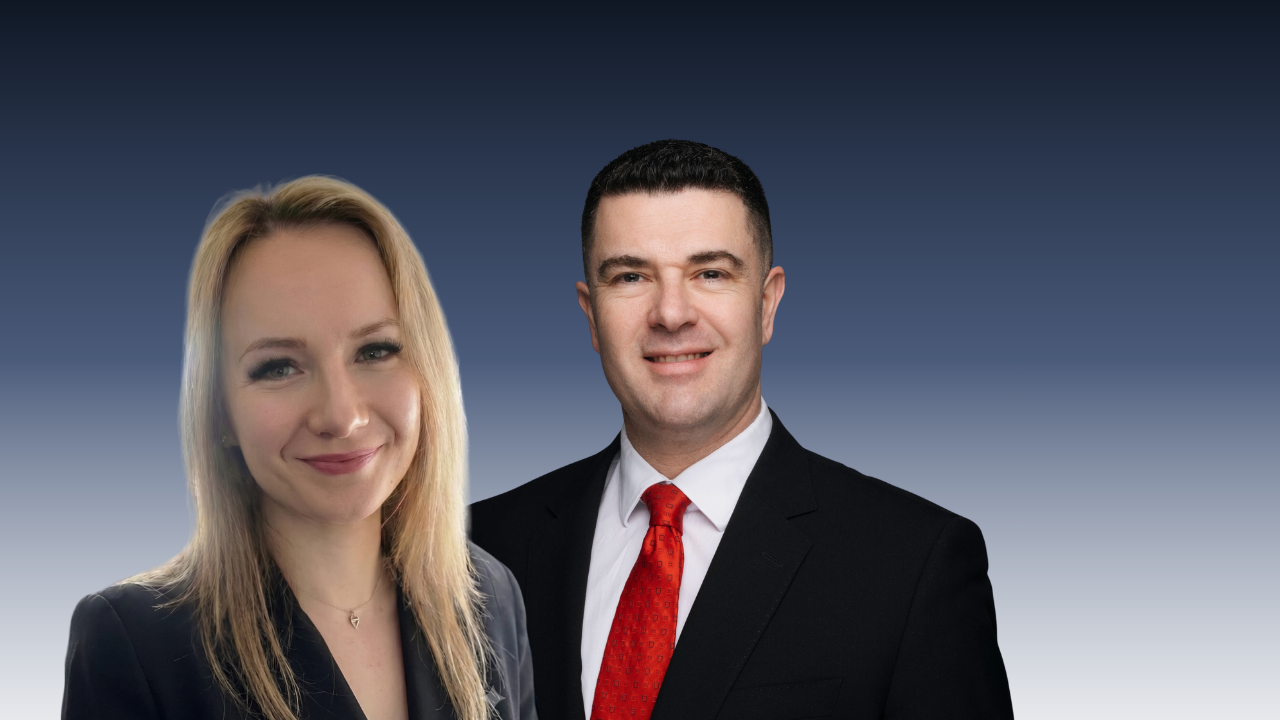
In an environment marked by growing geopolitical tensions, accelerating tax reforms, and international mobility that is profoundly reshaping life trajectories, high-net-worth families must rethink how they structure, protect, and pass on their wealth.
Morgan Zouaoui, founder of the family office Morgan & Cie, has been advising entrepreneurs, UHNWIs, and international families across Europe, the Middle East, and Asia for over a decade.
With a resolutely cross-border approach, he shares with Hubfinance his vision of wealth management advice capable of bringing clarity, consistency, and stability to a world that has become more complex than ever.
In a context where tax, geopolitics, and regulations are evolving faster than wealth can be transferred, how do you view the challenges facing the international families you support today?
International families and executives are navigating an unstable and uncertain environment today. Tax reforms are coming one after another, countries are turning inward, markets are becoming more volatile, and our clients’ lifestyles are increasingly international. As a result, many families feel they are losing visibility and clarity: it is not so much taxation or investment performance that concerns them, but the inability to look ahead ten or fifteen years with confidence.
What the families, executives, and expatriates we serve are seeking is not a one-off optimization. It is a comprehensive and deep understanding of their situation—a way to structure and grow their wealth so that it remains coherent, transparent, and resilient, even as their lives change. In an increasingly fast-paced world, this clarity has become a genuine necessity.
Morgan & Cie. stands out for its highly cross-functional approach to wealth management. In your view, what characterizes a family office truly capable of supporting a family across borders?
A truly cross-border family office is one that understands the reality of modern families: multiple places of residence, a business in France, an international holding company, investments in Luxembourg, accounts in Switzerland or Singapore, a real estate project abroad, and, often, children spread across several continents. Specializing in a single country is no longer enough; the real value lies in the ability to offer a comprehensive view and the mobility of an advisor capable of traveling to meet the family, wherever they may be.
This requires structuring assets effectively across multiple jurisdictions, coordinating lawyers, tax specialists, and notaries, streamlining existing arrangements, and proposing a global asset allocation strategy independent of local markets. High-net-worth families no longer want a product catalog, but clear guidance and highly customized support. They seek a single point of contact capable of connecting all stakeholders, lightening their mental load, and providing long-term peace of mind.
Reforms in France, international pressure for transparency, and the growing mobility of entrepreneurs are creating a new wealth management landscape. What structuring mistakes do you see most often?
We often see an accumulation of assets and decisions made over the years without a real big-picture view. Many families have built their wealth opportunistically, invested in real estate without a long-term strategy, or maintained an overly local structure despite a life that has become international. This often leads to unnecessary exposure to the IFI, excessive taxation, and an unsuitable asset allocation.
Added to this are a lack of supplemental income, spousal protection (income disparity), confusion between private and business assets, and poorly prepared succession planning in a context of high mobility. The problem is not the size of the estate, but its lack of organization and operational structure. Without the guidance of a family advisor, it becomes scattered and vulnerable, even risky. A family office provides precisely the coherence and stability that are lacking.
In this context, what do you consider to be the priorities when a family decides to review its wealth architecture?
When we review a wealth architecture, the first step is to make things understandable. Many families do not realize how scattered their assets have become over time: forgotten old accounts, investments that no longer meet their needs, successive changes in private bankers or independent financial advisors without proper follow-up, and legal structures that have become unsuitable and sometimes even risky from a tax perspective. A comprehensive review, conducted with an experienced family advisor, allows us to clearly identify risks, duplications, gaps, and current opportunities.
Next comes the simplification process: restoring coherence, separating business from personal affairs, securing recurring income, and building a more robust and international asset allocation. Succession planning then fits naturally into this framework, especially for mobile families. The goal is not to upend everything, but to make the family’s wealth fluid, solid, and aligned with the next stages of life across generations.
What is your philosophy on support, and what role does a family office play today?
I am convinced that wealth has value only if it is clear, organized, and in tune with the life of the family, entrepreneur, or expatriate who holds it. In a world as unstable as ours, performance is no longer enough; what really matters is stability, consistency, and the ability to make thoughtful decisions at the right time, free from emotional bias.
An international family office must play this stabilizing role. It provides the time needed, simplifies what has become complex, and anticipates when families no longer have the necessary perspective. At Morgan & Cie, we restore valuable clarity for our clients: a clear strategy, a solid structure, and the peace of mind that allows them to focus on their lives and their plans.
This role has become essential. In an ever-changing environment, an independent family office is no longer a luxury but an indispensable tool for protecting and passing on wealth sustainably. Great families like the Rockefellers and the Carnegies understood this before anyone else: a dedicated investment team radically changes the trajectory of a family’s wealth.