Hedon Family Office has established itself as a trusted partner for entrepreneurial families and high-net-worth individuals across Europe. With dual expertise in global wealth engineering and investment strategy, the firm stands out for its rigorous, multi-criteria approach—essential for navigating complex jurisdictions such as France, Belgium, and Luxembourg.
Today, we speak with Yohann Derbyshire, CFA—Head of Investments at the firm and lecturer at Paris II Panthéon-Assas University—to analyze the challenges of a financial world undergoing profound change.
In a wealth management landscape marked by geopolitical fragmentation and structural shifts in returns, the central question for European families is no longer how to maximize short-term performance, but how to build a true architecture of resilience.
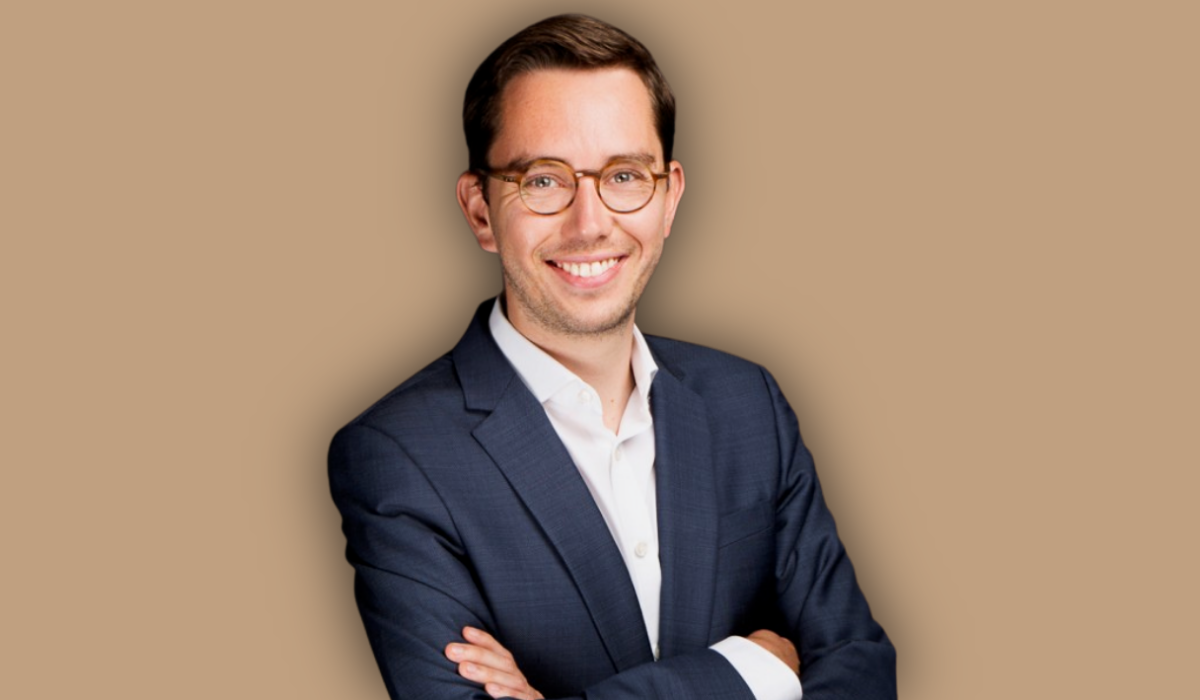
Yohann Derbyshire, CFA – Head of Investments at Hedon Family Office.
From your perspective on France, Belgium, and Luxembourg, what are the key economic pillars that will shape 2026 for European families?
First, the new interest rate and inflation regime, now within an international framework. By 2026, inflation will be better under control but will remain structurally higher than historical targets, with central banks adopting a cautious stance and implementing differentiated monetary policies. This restores the importance of duration management, bond selection, and credit analysis, as well as cross-currency arbitrage, particularly for multi-currency portfolios.
The year 2025 marked the end of a period when it was possible to achieve nearly 4% in European Investment Grade without taking significant risk. In an environment where returns are once again more constrained, it becomes necessary to further diversify sources of performance through active and selective management. This may involve a controlled reduction in liquidity, notably through private debt or alternative strategies (hedge funds), which provide decorrelation and consistent performance. Conversely, certain asset classes whose primary driver relies on high leverage or a strong dependence on the cost of debt could face greater challenges in the coming years, in an environment of persistently higher interest rates than in the past decade.
Next, global asset allocation and currency risk are becoming major issues. The year 2025 served as a stark reminder: despite the solid performance of U.S. markets in dollar terms, the sharp decline in the USD significantly eroded returns for European investors. An international allocation can therefore no longer be conceived without active currency management. The dollar remains a key currency in portfolios, but it can no longer be considered an automatic safe haven. Diversifying currency exposures and dynamically managing hedges are becoming true drivers of performance and capital protection.
Finally, geopolitical fragmentation and the restructuring of value chains. Deglobalization, trade tensions, targeted reindustrialization, and economic sovereignty are redrawing the map of winners and losers. For European families, this reinforces the case for a truly diversified allocation—across regions, currencies, and sources of return—and for increased exposure to real and private assets (infrastructure, private debt, private equity), which can capture structural demand while providing decorrelation.
Furthermore, the high concentration of equity markets around a few major winners in artificial intelligence clearly raises the question, in terms of risk management, of the relevance of purely passive approaches to equities.
In light of these challenges, how is the mission of a Multi-Family Office like Hedon evolving? Is it about preservation or active diversification?
The mission of a Multi-Family Office like Hedon is evolving: we are no longer solely focused on portfolio management, but on building a true architecture of wealth resilience.
In the face of more volatile, fragmented, and complex markets, the central question is no longer “how to maximize short-term performance,” but “how to avoid irreversible mistakes in the long term.” This evolution translates into three major areas of focus, supplemented by a recent, transformative shift.
First, a strengthening of governance and risk management. This involves clear allocation rules, defined risk budgets, regular stress tests, and a disciplined rebalancing process. The goal is to secure the wealth trajectory, regardless of market cycles.
Second, more active diversification, with a focus on quality. By 2026, performance will no longer stem from a single driver. Equity markets remain promising but are sharply polarized between tech stocks and more cyclical or value segments; bonds remain attractive but are seeing their yields normalize; and private and alternative assets play a central role, both as a source of performance and as a tool for diversification and decorrelation.
The coming years are likely to see increasing performance dispersion, particularly in the unlisted alternative sector. Our due diligence and monitoring processes must therefore be ever more robust in order to identify the best solutions.
Third, the rise of “evergreen” private assets is transforming how we think about portfolio liquidity. Although private assets are by definition an illiquid, long-term asset class, these evergreen vehicles offer long-term exposure to private markets—private equity, private debt, infrastructure—while providing mechanisms for gradual liquidity. They allow us to move beyond an overly binary distinction between liquid and illiquid assets and to integrate private assets as a structural and actively managed component of the allocation, rather than as a simple “closed block” frozen in time. Their case-by-case integration into portfolios, taking into account various factors (liquidity needs, fees, performance, sector exposure, etc.), is certainly a key challenge for the coming years.
Finally, wealth management is becoming increasingly global. Our clients’ personal situations are becoming more international, and so is our support: asset structuring, liquidity management, taxation, succession planning, and multi-jurisdictional coordination, particularly for families with a presence in France, Belgium, and Luxembourg.
Thus, it is not a matter of choosing between preservation and diversification. Preservation today requires active, selective, and controlled diversification—certainly not dispersion.
Beyond short-term cycles, what transitions do you consider essential for a multigenerational strategy?
Two transitions have become non-negotiable in a multigenerational wealth strategy.
The technological transition, dominated by AI and digital sovereignty. AI is no longer a “sector”; it is a layer of efficiency that will permeate all industries: healthcare, finance, manufacturing, and services. The challenge for a portfolio is to be exposed not only to technology “champions,” but also to companies capable of integrating AI into their products, processes, and productivity—while remaining mindful of valuations.
The energy transition and climate adaptation, through real assets. It’s not just about “ESG.” It’s a matter of infrastructure: networks, storage, energy efficiency, logistics, data centers, water, renovation… For a long-term investor, these themes translate well through infrastructure, for example, offering low correlation with equity markets and attractive returns.
As a lecturer at Paris II Panthéon-Assas University, what key skill is essential to impart for managing capital across multiple generations?
The key skill is decision-making discipline—that is, the ability to form an independent judgment by separating emotion from method.
Over several generations, performance does not come from a “lucky break,” but from the repetition of sound choices: a consistent allocation, controlled diversification, rigorous risk management, clear governance, and, above all, steadfastness during difficult times.
I strongly emphasize to students the need to form their own opinions. Quick and simplistic analyses are often traps, particularly in an environment where information is abundant and instantaneous. A good investor is not the one who reacts the fastest, but the one who takes the time to understand, question, and prioritize.
In a world increasingly dominated by analyses produced or assisted by artificial intelligence, critical thinking is becoming a core skill. AI is a powerful tool, but it does not replace judgment, responsibility, or an understanding of risks. Knowing how to read, challenge, and contextualize an analysis is now just as important as producing it.
This also requires developing deep financial expertise, as capital management remains a core discipline where an understanding of economic, financial, and legal mechanisms is essential for making sustainable decisions.
Finally, I want to emphasize a fundamental point: stay curious—stay curious—stay curious. Intellectual curiosity is the key to everything. It allows us to avoid dangerous certainties, adapt to a constantly changing world, and continue learning—which is undoubtedly the best guarantee for managing wealth across multiple generations.
One word to define the management mindset at Hedon Family Office for 2026?
Selectivity.
Because in 2026, there will be opportunities, but they won’t be uniform: polarized equity markets, quality gaps in credit, diverging trajectories among European countries, and valuations that are sometimes demanding. Our job is to choose through a rigorous and robust process.
Why Hedon Family Office is redefining the standards of support
In a financial landscape where complexity is becoming the norm, Hedon Family Office positions itself as an architect of protection and growth. By combining tactical agility in global markets with in-depth multi-jurisdictional legal and tax analysis, the firm offers families a 360° view of their situation. It is this combination of rigorous selectivity and critical thinking that enables Hedon to transform technological and environmental transitions into true pillars of multigenerational performance.
Hedon Family Office is an active member of the Hubfinance community.
Would you like to connect with Yohann Derbyshire or the teams at Hedon Family Office?
Don’t miss out on any more opportunities for exclusive meetings and strategic insights. To access their expertise and participate in our upcoming premium events:
👉 Sign up now on the Hubfinance
platform. Follow Hedon Family Office and stay at the heart of the wealth management ecosystem.